
 Contact Us
Lab-grown diamonds vs. Natural diamonds: The ultimate diamond showdown
This affordability is paired with strong ethical and environmental benefits. Lab-grown diamonds provide a transparent and conflict-free source, in contrast to the convoluted supply chains connected to mining, which can be connected to moral quandaries and environmental disruption. Customers who are mindful about the environment will appreciate their use of less water and energy during production. As consumers become more informed and value sustainability, there is a growing demand for these modern treasures. People start to go towards ethical and innovative sourcing with financial limitations and personal preferences when choosing between natural and lab grown diamonds.. As a result of this shift, the diamond industry is evolving, illustrating how beauty, brilliance, and responsible consumption can coexist peacefully.
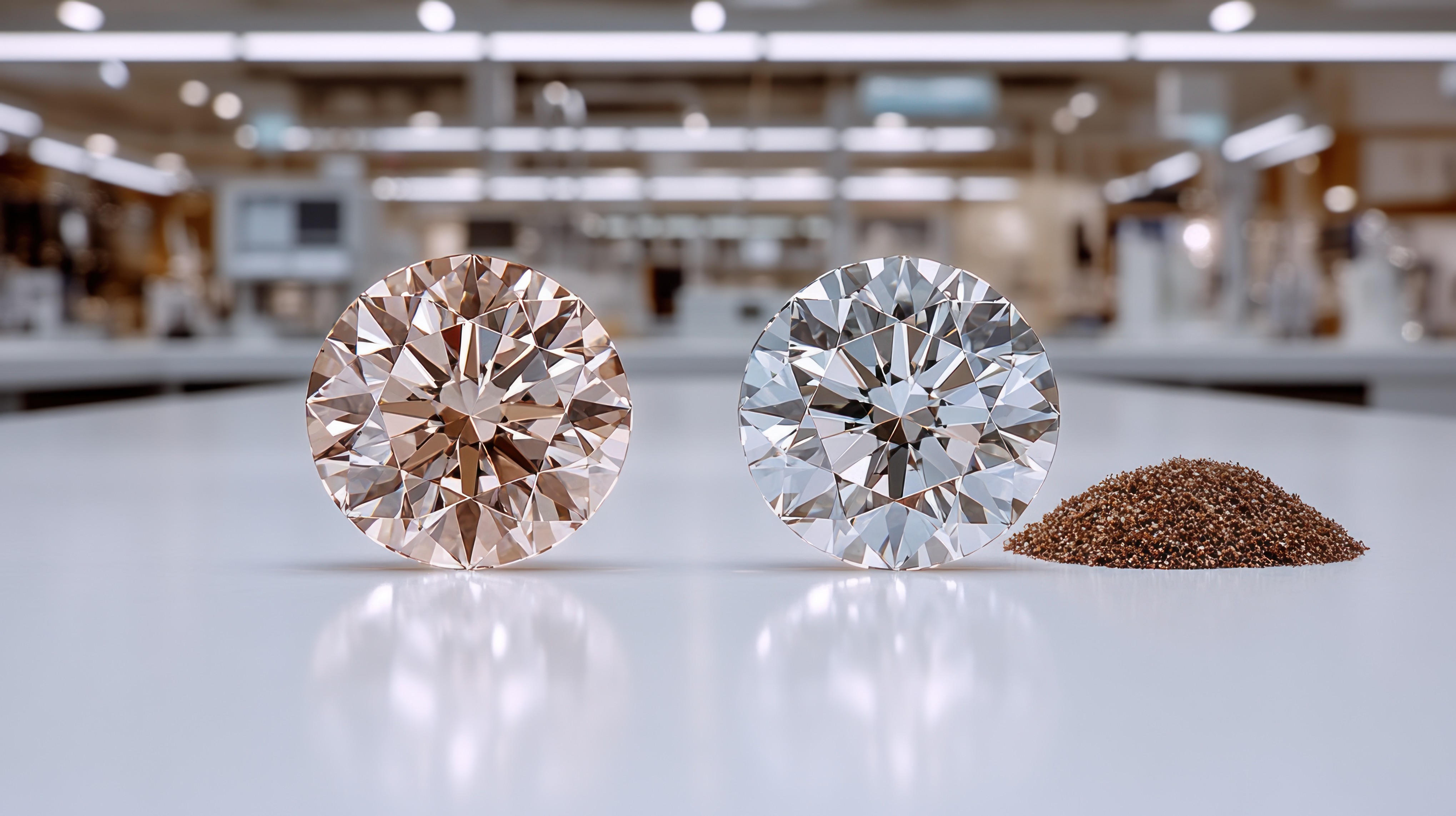
How does each diamond come to be?
The origin of natural diamonds
The science behind lab-grown diamonds
High-Pressure, High-Temperature (HPHT)
Growing chamber: A small diamond seed is placed in a chamber containing a carbon source, typically high-purity graphite, and a metal catalyst.
Extreme conditions: Massive presses then subject the chamber to temperatures exceeding 1,500°C and immense pressure, upwards of 730,000 pounds per square inch.
Crystal formation: The high heat melts the metal catalyst, which then dissolves the carbon source. The dissolved carbon then crystallizes around the diamond seed over a period of several weeks as the conditions are carefully maintained.
Chemical Vapor Deposition (CVD)
Vacuum chamber: A thin slice of a diamond seed is placed in a sealed chamber.
Carbon-rich gas: A gas that is rich in carbon, like methane and hydrogen, is pumped into the chamber and heated to temperatures between 700°C and 1,200°C.
Plasma ionization: A microwave beam or other energy source ionizes the gas, causing the carbon molecules to break down into a plasma cloud.
Layer-by-layer growth: The pure carbon atoms then "rain" down and bond to the diamond seed, building a larger diamond crystal, layer by layer. This process is highly precise and results in high-quality diamonds, though it can take up to a month.
Why are lab-grown diamonds cheaper?
Production costs
Lower overhead: The production of lab diamonds requires significantly less expensive labor, machinery, and land rehabilitation efforts than the process of mining natural diamonds. The supply chain is shorter, as the entire process can often happen in a single facility.
Market dynamics
Ethical sourcing: Lab-grown diamonds bypass the ethical and environmental issues often associated with mined diamonds, such as conflict sourcing and habitat destruction. Although it doesn't directly affect costs, it enables lab-grown diamonds to be promoted as a more environmentally friendly choice, appealing to a different market.
Value and perception
Resale value: Mined diamonds historically have a higher resale value due to their perceived rarity. However, lab-grown diamonds offer a much lower initial cost, which is a better financial option for many buyers who do not intend to resell the stone.
Ethical and environmental considerations
Ethical considerations
Fair employment practices: The manufacturing of lab-grown diamonds occurs in regulated environments with documented safety protocols and fair wages for workers. On the other hand, unsafe working conditions and labor exploitation have been connected to certain natural diamond mining operations.
Supply chain transparency: With lab-grown diamonds, the origin is clear, and the entire manufacturing process is traceable. The natural diamond industry has made strides in transparency through initiatives like the Kimberley Process, but loopholes and traceability issues can still exist.
Economic impact on mining communities: Although the rise of lab-grown diamonds offers new job opportunities, communities that have historically relied on the natural diamond industry for economic development may suffer if traditional mining is abandoned.
Environmental considerations
Minimal land and habitat disruption: The laboratory setting eliminates the need for large-scale land excavation, which in traditional mining can lead to deforestation, soil erosion, habitat destruction, and the displacement of wildlife.
Reduced water usage and pollution: Lab-grown diamonds require minimal water compared to the large quantities used in mining for extraction and processing. The process also avoids the water contamination that can occur from chemicals like cyanide used in mining operations.
Waste management: Lab production generates far less waste compared to the extensive rock and soil tailings produced by mining activities to make the most sustainable choice, look for lab-grown diamond producers who use renewable energy and have certifications that verify their commitment to sustainability. As technology is improving everyday there is a high chance of advantages of buying lab grown diamonds will also improve.
How are lab-grown diamonds a better choice than natural diamonds?
Lab-grown diamonds
Ethically Sourced: They are grown in controlled laboratory settings, which ensures their origin is conflict-free and ethically sound.
Environmentally Sustainable: Compared to conventional diamond mining, the production of lab-grown diamonds uses fewer natural resources and has a smaller negative influence on the environment.
Chemically and Visually Identical: A lab-grown diamond is identical to a natural diamond in all respects—chemically, physically, and optically—and cannot be distinguished with the naked eye.
Consistent High Quality: The controlled growing process can result in fewer inclusions and superior clarity compared to many natural diamonds.
Variety of Colors and Options: Lab technology allows for greater control over the final product, offering more availability and a wider variety of colors.
Natural diamonds
Higher Long-Term Value: Due to their finite supply and a well-established market, natural diamonds have historically held their value better than lab-grown diamonds.
Traditional Prestige: Many people find that natural diamonds are more romantic and special because of their lengthy history and tradition.
Possible Ethical and Environmental Issues: Although some safeguards, such as the Kimberley Process, have been put in place, the diamond mining industry has previously come under fire for its unethical practices and negative effects on the environment.
Inclusions and Imperfections: Natural diamonds may contain inclusions or flaws from their formation process, which can affect their clarity.
Higher Price: The rarity and high costs of mining and transportation contribute to a significantly higher price tag compared to lab-grown diamonds price.
How is Klifora better than others in the case of lab-grown diamonds?
Environmental advantages of Klifora's lab-grown diamonds
Reduced carbon footprint: The manufacture of lab-grown diamonds has a significantly lower carbon footprint than mining. Some reports state that the difference can be substantial, with one source reporting that grown diamonds emit only 0.028 grams of carbon per carat, compared to 57,000 grams for mined diamonds.
Less waste and pollution: Grown in a controlled environment, lab diamonds minimize waste and eliminate air and water pollution from mining chemicals.
Ethical sourcing
Transparency: The controlled lab setting ensures that the origin of each diamond is traceable, giving consumers confidence in its ethical sourcing.
Manufacturing and value
Better value: Lab-grown diamonds price is usually less than mined diamonds of the same size and grade because of a more simplified and effective production process. Lab grown diamonds are cheaper. Although Klifora makes a strong case for its goods as a more environmentally friendly option, buyers should be aware that the precise environmental effect of any lab-grown diamond manufacturer varies depending on variables such as the energy source utilized in their facilities.
Considerations
Ethical standards: The term "sustainable" can encompass a company's labor practices, not just its environmental impact. While the manufacturing process is ethically transparent, customers can still research a company's overall business practices.
Klifora offers prospective entrepreneurs a flexible and comprehensive franchise program to enter the booming market for lab-grown diamonds. Franchise options range from home-based businesses with an initial investment of ₹15 lakhs to more aggressive retail models such as mall kiosks (starting at ₹50 lakhs) and high-street retail stores (starting at ₹1 crore). Franchisees receive certified and hallmarked lab-grown diamond products, display materials, and marketing support as part of the program's substantial support package. Klifora also offers extensive training on product knowledge, sales techniques, and market trends to ensure partners are well-equipped to succeed. The business franchise fee is 1.5 lakhs, and the app offers powerful management of orders.
Conclusion
Klifora's products are built around a commitment to long-term brilliance, which includes certified lab-grown diamonds that are as elegant and high-quality as mined and ethically sourced stones. Each Klifora diamond shows exemplary craftsmanship that customer wants.. Wearing apparel that reflects elegant and considerate living is an investment in a period when morality and luxury coexist.
Ready to experience ethical brilliance and timeless elegance? Discover the sustainable luxury of lab-grown diamonds today to find a stunning piece that precisely matches your values and price range. Explore a collection and choose a beautiful, responsibly crafted piece that makes a statement without compromise. Go to a website now to find your perfect, self-aware sparkle.
FAQs
Q: Are lab-grown diamonds real diamonds?
A: Lab-grown diamonds are chemically, physically, and optically identical to mined diamonds and will test as real diamonds.
Q: How is the quality of lab-grown diamonds evaluated?
A: Lab-grown diamonds are graded as premium, standard, or no grade at all if the quality is subpar.
Q: What is the resale or long-term value of a lab-grown diamond?
A: Unlike natural diamonds, which have historically held their value, lab-grown diamonds do not have a strong or established resale market. Given that it is a manufactured good, its value usually declines with time.
Q: What is the ethical and environmental impact?
A: One of the main reasons many consumers choose lab-grown diamonds is for their ethical sourcing and lower environmental footprint. While they avoid the humanitarian and ecological issues associated with some mined diamonds, it's important to understand the energy used in their creation. The final stone's overall sustainability may be impacted by the energy source (fossil or renewable) and production method (HPHT or CVD.
Q: how much difference is there in natural and lab grown diamond’s price?
A: in natural and lab grown diamond’s price there is 50-60%diffrence.